With more than four decades of experience in tunnelling and underground space, Eivind Grøv has helped shape projects, research and industry thinking around the world. A former Vice President and Honorary Affiliate Member of the International Tunnelling and Underground Space Association (ITA), he has dedicated his career to advancing underground solutions through engineering, innovation and international collaboration. Ahead of delivering the Muir Wood Lecture at ITA WTC2027, he shares the experiences, ideas and ambitions that have shaped his career and his vision for the future of the industry.
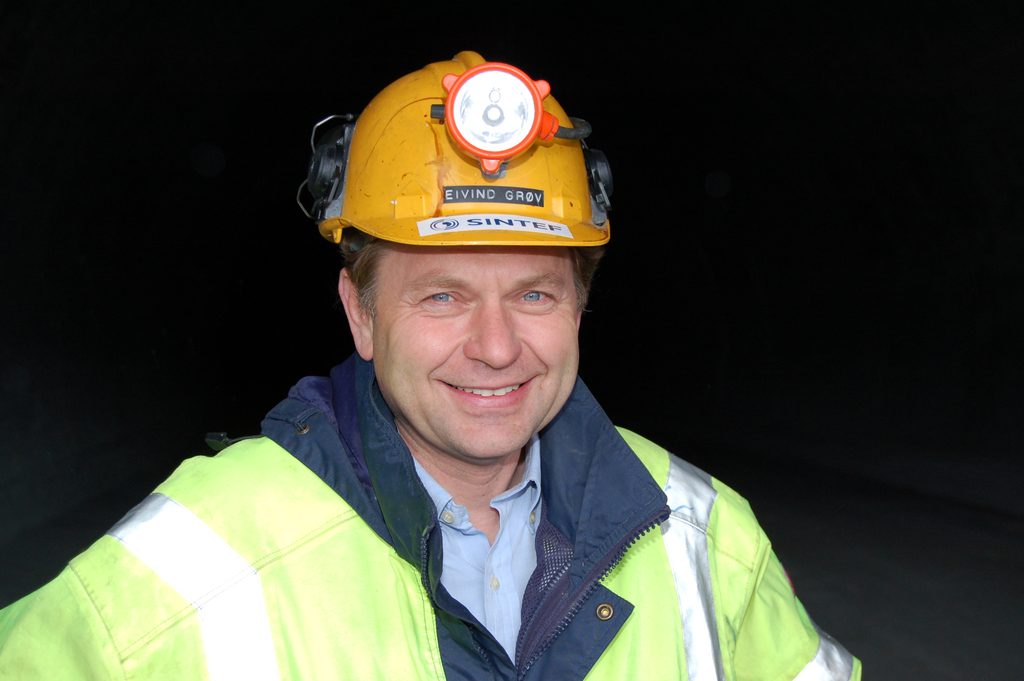
Q1. You have spent more than four decades shaping tunnelling and underground space development. Looking back, what inspired you to dedicate your career to this field?
I have been asked this question on earlier occasions, and it is never easy to answer. Many people follow the career paths of their parents or grandparents – but no one in my immediate family had a similar background or pursued an academic career. Looking back, several factors influenced my decision:
- I have always been an outdoor person – geological mapping tunnel/cavern inspections are valuable breaks from ordinary office hours.
- I have always been fascinated by travelling and by meeting and connecting with people from different cultures and regions of the world, and tunnelling is a universal language that brings us together.
- Following graduation I worked for two years in the oil and gas industry on processing geophysical data, but I found it a little monotonous.
- When my family grew with my wife and four children, long travels and extended stays away from home became a challenge. So, I joined a project in Saudi Arabia for four years and brought my family with me and learned a lot more of a very different culture. And every day had new technical challenges to be solved. A fantastic period of my life.
- In tunnelling there are few exact answers– there is always a challenge to balance exact scientific responses with my own experience and empirical approaches. This is what I enjoy the most.
- There is a term ‘Geofantasy’ which refers to the interpretation of engineering geological conditions between, for example, two boreholes or between two seismic lines. These interpretations must be based on the available factual data, and selecting the right investigative tools is essential to gather the correct information and develop a proper interpretation.
Having the competence to make the planet a better world has been important to me. In the geopolitical challenges we see today and lack of many resources – going underground is hotter than ever.
Q2. You have described your Muir Wood Lecture as moving “from breaking barriers in tunnelling to pushing the limits”. What are the biggest barriers the tunnelling industry needs to overcome today?
From this perspective I have listed some issues that act as barriers;
- The most common barrier is risk aversion – there is always a residual risk when going underground.
- The second barrier that I see is that everything in tunnelling must be ‘proven technology’. This is in itself a requirement that loses relevance – how could we possibly innovate otherwise?
- The third major barrier consists of rules, regulations and standards. By fully adhering to these restrictions there is not much room for new solutions, innovations and flexibility amongst the participants in the industry.
- The fourth issue is related to doing things the first time – look at the NASA Apollo program to land the first man on the moon during the 1960s – they made it. The tunnelling industry needs some ‘moon landings’ to show that we are innovative, brave and bold, and that we have ambitions for our industry to serve the needs of society.
- The fifth issue relates to taking new ideas and solutions from the stage of models and pilots to full-scale applications.
Based on this, I will draw the line between historical ‘moon landings’ and future applications that will push the limits of our industry. I am extremely engaged in how the tunnelling and underground industry will develop over the next fifty years, creating new “moon landings”, new technologies and new applications that will serve society.
Q3. Throughout your career, you have contributed to projects across many countries and different geological environments. What has this global experience taught you about innovation and collaboration?
In my opinion, innovation is basically incremental. We develop excavation methods, support systems and transport solutions etc in a slow pace, and we are not really developing radical new solutions for the use of the underground. Clients are often conservative. To me, it appears that we are more concerned about things that can go wrong than focusing on the competence that we actually have in tunnelling and underground construction. We are adding layer upon layer of safety to our design until it becomes too conservative, costly, complex or even unconstructable. I think we are overcomplicating things. Anyone who innovates would look for an industry where it is possible to see a market and a profit from such innovations. And they do not have time to wait for handbooks or standards to be rewritten, or for solutions to become ‘proven technology’.
As far as collaboration is concerned, I feel that the parties in the industry communicate and collaborate very well, no matter their background, nationality or expertise. Competence and collaboration are always welcome.
Q4. Having contributed to ITA for many years as a volunteer, Vice President and international ambassador for the profession, what has the Association meant to your career? What advice would you give to the next generation of tunnelling professionals considering becoming involved in ITA and its activities?
Yes, I think that I have had almost all eligible positions in the ITA, except President as I was a presidential candidate in 2010 at the Vancouver WTC but lost the election to Prof. In-Moe Lee. First of all, I worked on a lot of different projects around the world and met a lot of good people. ITA has meant a lot to me personally and I have often found useful and valuable information in ITA publications and proceedings, but the most important aspect has been the network and social interactions with friends and colleagues around the world. ITA is an extended family– meeting at our annual WTCs is like a big reunion.
This network also extends well beyond our professional lives. I remember travelling in Bangkok with my family of six when we encountered a language barrier while trying to arrange transport. I called my friend Zaw Zaw Aye from the Thai tunnelling community, and within seconds he had helped us resolve the situation. Experiences like this remind me that ITA is not just a professional association—it is a global family, where friendships and mutual support often go far beyond our technical work.
I always encourage young professionals to identify the association that fits best with their technical interest. For me, ITA was the best fit. There are many similar associations and ITA may not necessarily fit everyone, the Next Gen has to do some homework to identify the profile of each association and make their own choice on that. The important thing to me has been that ITA deals with tunnelling from a broad perspective, there are professionals of different types and backgrounds. The yearly WTC is an important meeting point to share knowledge, to learn and build a network.
My advice to the Next Gen would be that individuals who would like to get the most out of ITA should take on responsibility and duties themselves and actively participate in ITA activities.
Q5. Underground space is increasingly seen as a solution for global challenges such as climate change, urbanisation and resilience. How do you see its role in shaping the future of our societies, and which technologies or innovations do you believe will drive this transformation in the coming decades?
To be able to look into the future, we need to understand the past. As Winston Churchill stated: “The farther back you can look, the farther forward you are likely to see.” This applies to the tunnelling industry as well. Tunnelling began with water supply, followed by projects such as Cappadocia and Petra. The needs of the future may not necessarily be very different than those of several thousand years ago – we may not know where and how it will take place, but we know there is a need and it will move fast.
In my view tunnelling will be far more important over the next fifty years. One thing is related to the planned use of the underground like a Master Plan for the underground, such as those the Finns have developed for Helsinki and likewise for Singapore. If you allow me to list my response to the question, please see as follows:
- Ultra-long subsea tunnels to connect continents.
- CO2 and hydrogen storage in rock caverns – many academic resources are spent on these aspects today.
- Energy consumption is expected to increase significantly and nuclear power production is expected to contribute to a larger degree and location and storage must be found in safe conditions – logically under the ground.
- Food manufacturing and storage.
- I expect to see ultra-high head in hydropower projects and various power production concepts not yet seen to secure peak power balance.
- Last but not least, as it began – tunnels to control water, from flooding to drought.
The technologies we need to develop for the future are:
AI in all operations from pre-investigations to design to execution to geological and as-built mapping. Operating heavy machinery will be run by AI with operators acting as airplane pilots who allow the plane to fly by its own pre-programmed whilst pilots intervene when the system identifies abnormalities, or remotely operated from a contractors office or suppliers control room. Autonomous machineries will dominate the fleet of equipment, however, I do not see robots playing a significant role.
At the WTC in Montréal in 2026 I participated in the WG20 meeting, I gave a presentation on a research project we have just started up and also watched an interesting presentation on tunnelling on the Moon, or lunar tunnelling. Tunnelling on the Moon will force the development of solutions in automation, AI and many more areas that will also be applicable in the future to tunnelling here on the Blue Planet.
Q6. If there was one message you would like policymakers and the wider public to understand about the value of underground space, what would it be?
The message in short would be: Go underground – make alternative solutions underground!
The use of the underground is not necessarily limited to metros, trains and roads, and its potential is far from fully realised in any city worldwide. The only thing that sets limitations to the use of the underground is people’s imagination.
The only limitation I can see is that I do not think that people in the future will live their lives underground like in an underground inverted skyscraper – an Earth-scraper. Many will work in underground facilities but not have their living there.